




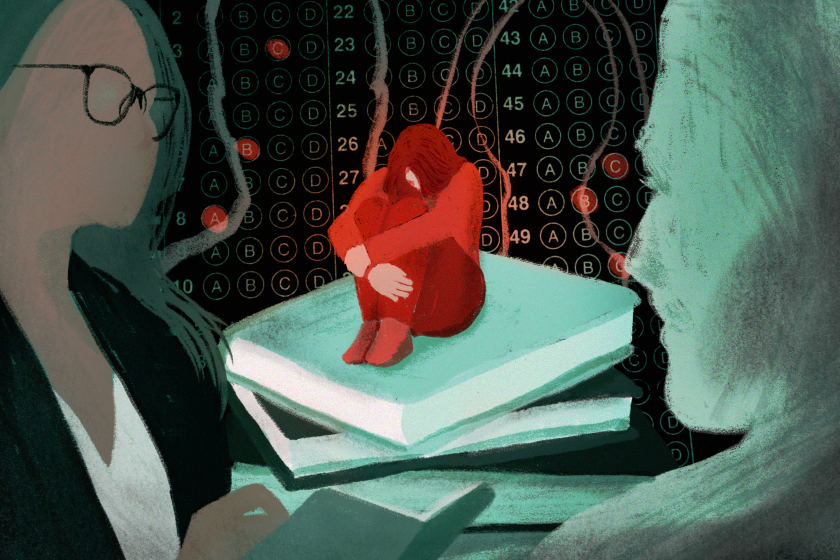
Northwestern University senior Erika Ruiz-Yamamoto nearly dropped out of school two years ago after reporting her sexual assault to college officials.
The aspiring doctor struggled to process what happened to her while juggling intense classes in what’s known as a “weed-out year” for premedical students. She requested basic accommodations for her schoolwork, like more time to complete assignments.
But Ruiz-Yamamoto said professors and administrators repeatedly denied her requests because they didn’t want to set a precedent for other students. She had to take a biology exam two days after she was assaulted.
“It felt like it was a constant situation of me having to demonstrate or convince or put on a show of just how badly I needed their assistance or their empathy,” Ruiz-Yamamoto said. “My sexual assault rocked my entire academic experience.”
A spokesperson for Northwestern did not respond to a request for comment, but according to its policy, the university will offer and provide survivors with reasonable accommodations, like help changing their class schedules.
Across the country, 1 in 3 survivors of sexual violence drop out of college, according to national research — slightly higher than the overall dropout rate. First-year students who experience sexual violence are even more likely to leave school.
Illinois is one of a handful of states with a law aimed at stopping that. The Preventing Sexual Violence in Higher Education Act requires public and private campuses to provide survivors with reasonable supports that can enable them to stay in school, like help getting extensions or counseling. It was enacted in 2015.
But advocates for those who have experienced campus sexual assault say many Illinois colleges are still not doing enough to help survivors like Ruiz-Yamamoto — and they want real consequences for colleges that neglect these obligations.
“Right now, if you don’t do what’s required by the law, there’s almost nothing the survivor can do to enforce the law,” said Sarah Beuning, an attorney for the Illinois Coalition Against Sexual Assault, which runs nonprofit rape crisis centers across the state. “If you want to stay and it’s your dream and it’s your goal, I feel like we should be supporting that as much as possible.”
State lawmakers are considering a bill that would allow college students who’ve been sexually assaulted to sue their institutions if they show “deliberate indifference” to a survivor’s request for support. The proposal would also require universities to provide support or appropriate alternatives regardless of what a student is studying.
“We’ve heard from students who’ve had to drop out of classes because the perpetrator was going to be in their class,” Beuning said. That can push back a survivor’s graduation date and make them pay more in tuition.
“I understand there are some classes that are offered once a semester with one professor in one room, and that’s really hard,” Beuning said. But “we would like universities to try really hard to come up with an alternative support that keeps their student on track and lets them still have a full experience as a college student.”
The bill has support from Republican and Democratic state lawmakers and proponents are hopeful it will pass during the December veto session. But the legislation has faced opposition from public and private universities across Illinois, including Northwestern University.
Ruiz-Yamamoto said she’s grateful advocates are focusing on survivors and what they need to stay in school, but also disappointed some universities won’t do more without the threat of being sued.
“Besides the time, it takes a lot of money to stand up to these powerful institutions and individuals that really do play a role in your future career,” she said.
But for Ruiz-Yamamoto, who is on track to graduate in the spring with a double major in biology and global health, speaking out will be worth it if it means other students get the support she did not.
Lisa Kurian Philip covers higher education for WBEZ in partnership with Open Campus.

Lisa Kurian Philip
WBEZHigher education reporter


